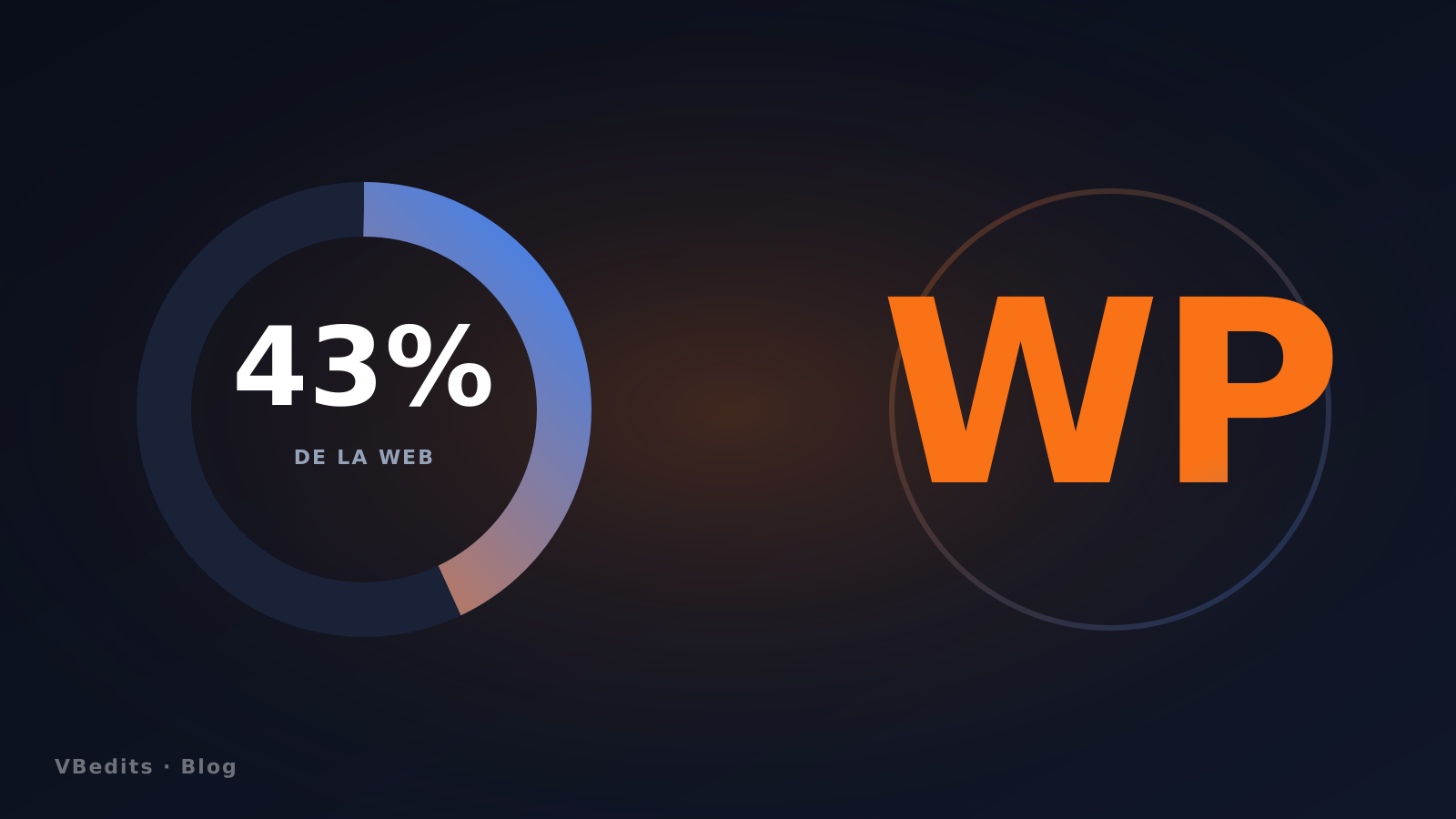
Every year a new article declares WordPress dead. And every year W3Techs publishes its numbers and turns out it still powers 43.3% of the entire web with a 62.7% CMS share. More than all the rest combined.
The reasons are the usual: low barrier to entry, huge ecosystem, dirt-cheap hosting, and a plugin/theme market covering any imaginable niche. But there's a less obvious reason that matters most if you build software for a living.
WordPress is the internet OS for SMBs
The average employee setting up a website for their business (a plumber, an English school, a dental clinic, a restaurant) still picks WordPress by default. Not because it's technically superior—it isn't—but because everyone around them knows how to fix it. Their IT-cousin understands it. The local agency understands it. The first freelancer they find on Google knows how to fix it. That's a huge moat that Webflow, Wix and Framer still haven't crossed.
Why indie plugins are still good business
- Massive market. 43% of the web = tens of millions of active sites. If just 1% pay 19 €/year for a plugin of yours, that's a business.
- Recurring revenue is easy to justify. People are used to buying premium plugins with annual licenses. Yoast, WP Rocket, ACF Pro, Elementor: all charge and nobody is surprised.
- Stable integration. The WordPress API has been stable for 20 years. Code from 5 years ago still works. That's gold in software.
- Built-in update system. If you do it right, the customer gets your new version with one click from Dashboard → Plugins. Smoothest thing in the world.
What isn't good news
43% being WordPress also means 43% of web hacks target WordPress. If you're selling plugins, your obligation is to write code that doesn't expose your customers. Sanitization, nonces, capability checks, selective autoloads, no assets loaded on every admin page that doesn't need them.
This store sells WordPress plugins and all of them integrate VBedits license management—the system explained in the "Integration kit" topic of the internal tutorial. Same mechanic as Yoast Premium or WP Rocket: the plugin code is GPL (you can share it), but updates and activation go through a license key that does control who's up to date.
As long as WordPress keeps powering 43% of the web, this model will keep working for devs who take it seriously.
Source: W3Techs — CMS market share.